
Viral Fruit Pastries: The Trendy Dessert Taking Over Social Media
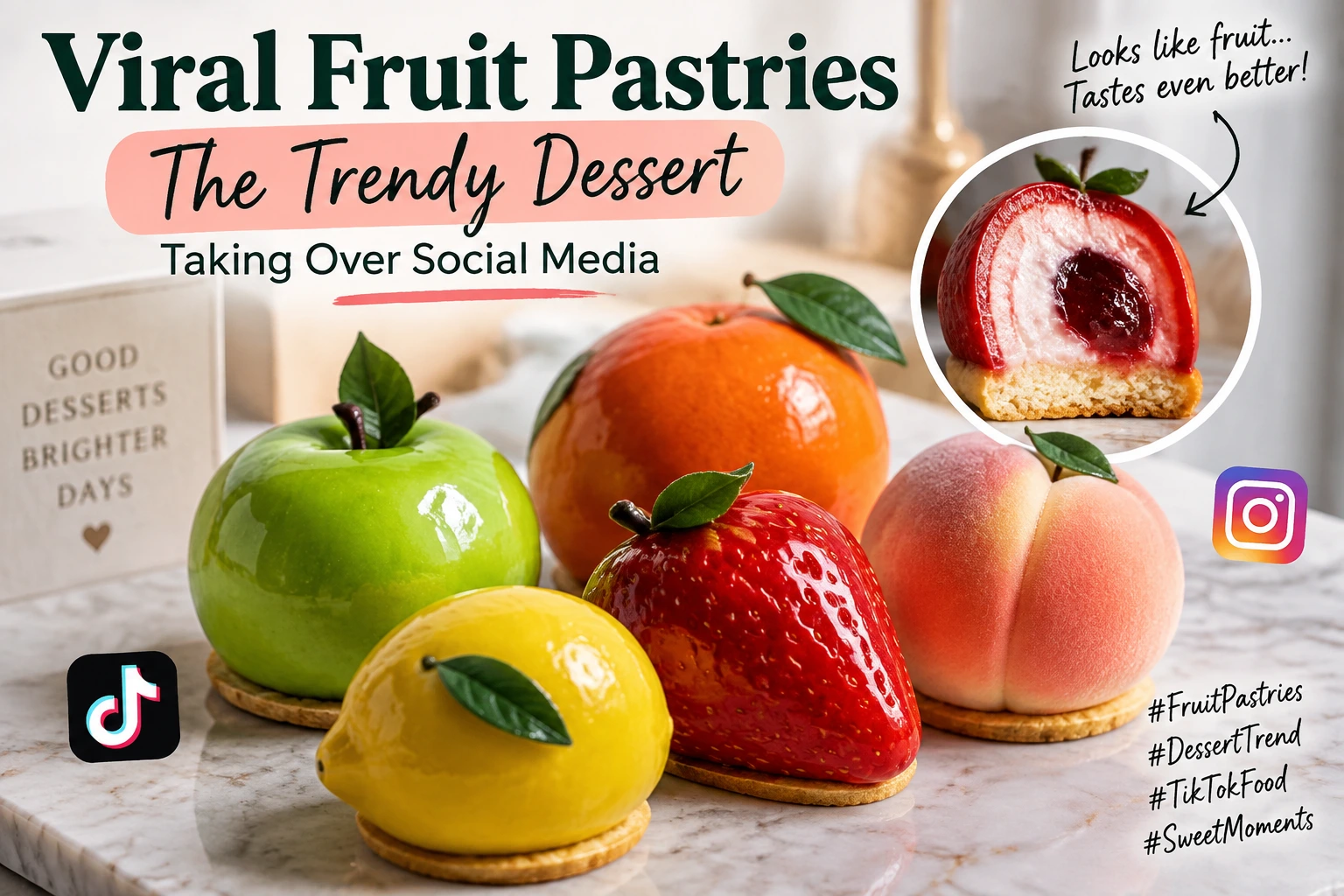
Scroll through TikTok or Instagram lately and there is a good chance you will run into someone sitting in their car, phone propped against the steering wheel, biting into what looks like a perfectly ripe strawberry or a shiny green apple. Except it is not fruit at all. It is a dessert, and the reveal of that first bite, showing a soft mousse interior instead of actual fruit flesh, is exactly why viral fruit pastries have become one of the most talked-about dessert trends in recent memory.
This kind of food moment does not happen by accident. It takes a mix of visual novelty, satisfying texture, and the kind of shareable surprise that keeps people watching until the very last second of a video. In this article, we will break down what makes these pastries so eye-catching, why they spread so quickly online, the different styles bakers are experimenting with, and how you can try recreating that same magic in your own kitchen.
What Are Viral Fruit Pastries?
At their core, viral fruit pastries are desserts shaped and colored to look exactly like real fruit, often so convincingly that people genuinely mistake them for the real thing until they take a bite. This style of pastry, sometimes referred to as trompe l’oeil, which translates to deceive the eye, blends French pastry techniques with a strong influence from Asian dessert artistry, resulting in treats that look like miniature sculptures rather than something baked in a kitchen.
The appeal goes far beyond just the surprise factor. Underneath that fruit-shaped shell is usually a carefully constructed dessert with multiple layers, often including a thin sponge base, a fruit compote or jam center for concentrated flavor, a light mousse filling, and sometimes a crunchy praline layer for texture contrast. The final exterior is typically a thin, glossy shell made with a cocoa butter based coating tinted to match the fruit it is imitating, giving it that signature glassy, almost too-perfect appearance that photographs beautifully.
Why Fruit Pastries Went Viral on Social Media
Part of what makes this trend so effective online comes down to the format people use to show it off. Rather than a traditional recipe video or a slow bakery tour, much of the content built around viral fruit pastries follows a simple, repeatable structure. Someone buys the pastry, holds it up close to the camera so viewers can admire how realistic it looks, then bites into it to reveal the soft, colorful interior underneath the shell. That contrast between expectation and reality is a natural hook that keeps people watching.
This kind of content also thrives because it rewards curiosity rather than requiring deep food knowledge to enjoy. Similar viral fruit ice cream dessert trends, such as fruit-inspired frozen treats, have also gained attention online because of their unique appearance and shareable presentation.Viewers do not need to understand pastry techniques to appreciate the illusion, which makes the trend accessible to a much wider audience than more niche culinary content. Add in the fact that these pastries tend to be available at specific bakeries rather than everywhere, and you get an added layer of appeal tied to scarcity and local discovery, since fans often film themselves tracking down a bakery after seeing someone else’s video first.
Popular Styles and Variations of Viral Fruit Pastries
While the overall concept stays consistent, bakers have taken the format in plenty of creative directions. Some of the most common shapes include strawberries, green apples, lemons, mangoes, and raspberries, each designed with careful attention to the natural texture and coloring of the real fruit, right down to tiny seed details or a subtle blush of color where sunlight would naturally hit the fruit.
Flavor profiles vary just as much as the shapes themselves. Some versions lean into a lighter, less sweet flavor that lets the fruit filling shine, while others incorporate more indulgent elements like pistachio or cacao inside shapes that do not necessarily match a fruit at all, showing how far bakers have pushed the format beyond its original inspiration. This willingness to experiment is part of why the trend has stayed interesting rather than feeling repetitive, since new bakeries keep introducing their own spin on the basic technique.
How to Make Fruit Pastries at Home
Recreating this exact bakery-level trompe l’oeil effect at home can be genuinely challenging, since it relies on precise mousse-setting techniques and a tempered chocolate or cocoa butter shell that takes practice to get right. That said, home bakers looking to capture the spirit of the trend do not need professional equipment to get started experimenting.
A good starting point involves working with silicone molds shaped like fruit, which have become much easier to find online as the trend has grown. Filling these molds with a fruit mousse made from pureed fruit, a stabilizer like gelatin, and whipped cream or a similar base gives you that soft, creamy interior. Once the mousse is frozen solid enough to hold its shape, dipping it in a colored cocoa butter or white chocolate coating creates the glossy shell effect, though getting the color and sheen just right often takes a few attempts.
For those less interested in the technical mousse work, there are simpler ways to play with the same idea, such as shaping fruit-flavored gelatin or panna cotta into fruit molds for a lighter, more beginner-friendly version. The goal is not necessarily to perfectly replicate what professional pastry chefs are doing, but to enjoy experimenting with the same visual concept that made the trend so popular in the first place.
Where to Find Viral Fruit Pastries Near You
As interest in viral fruit pastries has grown, more bakeries across different cities have started offering their own versions, often leading to long lines and quick sellouts. Cities with strong dessert and bakery cultures, including major hubs on the West Coast, have seen some of the earliest adopters of the trend build loyal followings simply through word of mouth and social media exposure.
The trend has not stayed confined to any one region either. Bakeries offering these fruit-shaped desserts have popped up in various parts of the country and internationally, showing just how far a strong visual food trend can travel once it catches on. If you are hoping to try one yourself, checking local bakery social media accounts is often the fastest way to find out who in your area has started offering their own version, since many smaller shops announce these items as limited daily batches rather than a permanent menu fixture.
Tips for Recreating the Viral Pastry Look
If your goal is capturing that same eye-catching presentation for your own photos or videos, lighting and angle matter just as much as the pastry itself. Natural light tends to bring out the glossy shell in a way that overhead artificial lighting simply cannot replicate, so shooting near a window or outdoors often gives the most flattering result.
The reveal moment is really what makes this style of content work, so timing your bite or cut to happen partway through the clip, rather than immediately, gives viewers a chance to admire the exterior before the surprise interior comes into view. Close-up shots that fill the frame with the pastry itself, rather than a wide shot of a table setting, also tend to perform better, since the entire appeal rests on how convincingly realistic the fruit shape looks up close.
Conclusion
Viral fruit pastries are a good reminder that food trends often succeed not just because something tastes good, but because it creates a moment worth sharing. The combination of clever visual design, satisfying texture contrast, and an easy-to-follow video format helped turn a niche pastry technique into a worldwide social media obsession. Whether you are hunting one down at a local bakery or attempting your own version at home, the trend captures something simple but effective, the joy of a dessert that manages to surprise you even after you already know the trick.